
How Private Equity Is Rewriting the Drugstore Lease Playbook, and What the Rise of Two-Year Extensions Really Signals for Owners
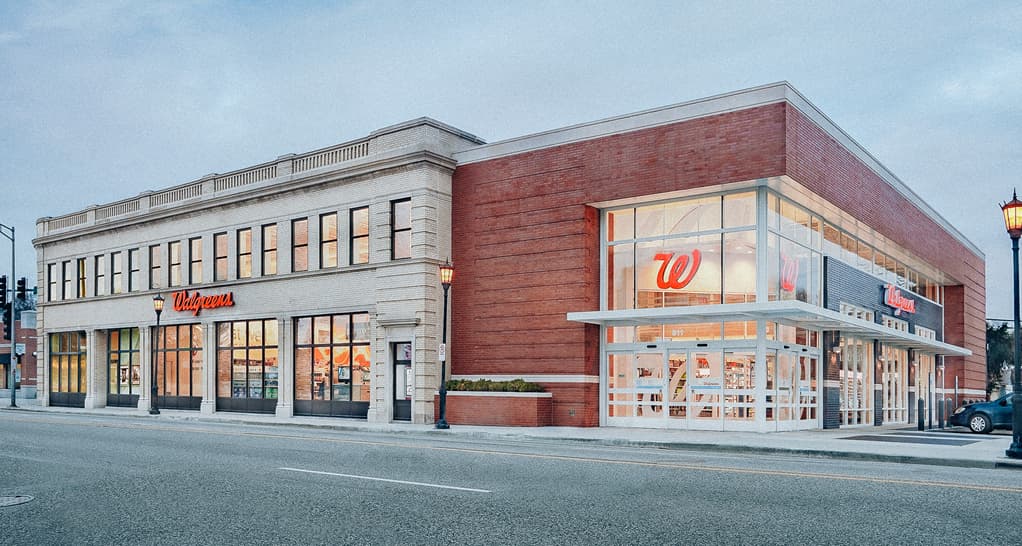
Walgreens has officially entered the Sycamore era. Sycamore Partners completed its acquisition of Walgreens Boots Alliance in late August 2025, taking the company private. The headline is familiar: a major retailer goes private, sheds public reporting requirements, and begins a period of “strategic” restructuring.
For real estate owners, however, the more important story is what happens next. Private equity does not treat leases as legacy obligations. It treats them as portfolio levers.
That shift is already showing up in extension behavior. Walgreens is still issuing traditional five-year, and in select cases ten-year, extensions. But two-year extension proposals are becoming increasingly common across a meaningful subset of locations. Not all stores, but enough that the pattern is clear.
If you see a two-year offer where you expected a five-year reset, it is easy to assume the worst. A more accurate framing is this: a two-year extension is often not a judgment on a specific store, but a portfolio-level strategy. Locations are being grouped into buckets.
This report is intended to help owners interpret what is happening by connecting three things: how private equity thinks about real estate, what Sycamore has already done since acquiring Walgreens, and what today’s lease signals are designed to enable next.
How Private Equity Actually Thinks About Real Estate
Public companies live and die by quarterly reporting, ratings agencies, and predictability. Private equity lives and dies by timing, optionality, and exits. In simple terms, a sponsor’s job is to stabilize operations, improve margins, create flexibility, and position the business, or pieces of it, for recapitalization, monetization, or exit within a finite window, typically three to seven years.
Real estate becomes a critical lever in that process. Leases are not viewed as routine renewals renewals; they are long-term commitments. And commitments reduce flexibility.
That matters at Walgreens because the footprint is enormous, uneven by market, and already in motion. Walgreens has publicly discussed closing roughly 1,200 stores over several years. Under private ownership, the pace, sequencing, and strategy of those decisions can become more deliberate, in part because they are no longer constrained by public-market optics.
What The “Tiered Extension” Pattern Is Telling Us
The most important nuance in today’s market is that Walgreens is no longer applying a single extension strategy across its entire portfolio. Instead, we are seeing a tiered approach: longer-term extensions on locations that appear to fit the long-term operating plan, and short-term extensions where flexibility is being preserved.
At the store level, short extensions are inefficient for Walgreens. They create more administrative work and less operational certainty. At the portfolio level, however, short leases buy time. They allow Walgreens and Sycamore to evaluate consolidation opportunities, relocation options, capital priorities, clinic strategy, and broader capital allocation decisions before locking in long-term obligations.
The Sycamore Move Owners Are Not Talking About Enough: Monetizing Corporate Real Estate
One of the clearest signals of how Sycamore is thinking about Walgreens real estate came quietly in late 2025, when Sycamore affiliates completed a roughly $490 million mortgage loan refinancing backed by a portfolio of 207 Walgreens-leased properties across more than 40 states. The transaction was structured as a single-asset, single-borrower CMBS deal.
This matters because it shows that Walgreens real estate is already being treated as a capital markets tool, not just operating infrastructure. Corporate-controlled stores can be pooled, financed, and used to support broader balance sheet strategy.
This is classic private equity behavior: identify financeable pools of hard assets and use them to improve flexibility at the platform level. Early post–take-private moves are often both operational and financial, even when they are not highly visible.
Corporate Motivation: The Question Owners Ask, and Brokers Rarely Answer
Every owner is asking the same question right now: What is Walgreens doing with my lease? To answer it, you have to think like the sponsor.
Sycamore’s incentives center on preserving refinancing flexibility, maintaining optionality, reducing footprint overlap, improving store-level productivity, simplifying operations across thousands of locations, and retaining the ability to monetize assets or business units when timing is favorable.
Since taking Walgreens private, Sycamore has reorganized the platform into five standalone businesses, installed new leadership, and begun simplifying overhead. The most visible move has been consolidating corporate staff out of downtown Chicago and back to the Deerfield headquarters campus, alongside reductions in corporate communications and public affairs functions.
On the healthcare side, Walgreens-backed VillageMD divested 32 Texas clinics to Harbor Health, signaling a willingness to unwind capital-intensive initiatives that do not fit the near-term plan. At the store level, Walgreens has continued modest pruning while implementing cost actions, including eliminating paid holidays for hourly workers.
Taken together, these moves point to measured simplification and operational tightening rather than wholesale disruption.
The Most Likely Real Estate Strategies Under Sycamore
(Presented as scenarios, because sequencing matters)
What follows are not guarantees or predictions of individual store outcomes. They are scenario-based strategies grounded in how private equity typically operates at scale, Sycamore’s observable actions since the take-private, and the real-time patterns owners are experiencing across the portfolio.
The value is not in predicting what happens tomorrow, but in understanding what today’s behavior is designed to enable next.
Scenario 1: Short-Term Lease Paper As A Deliberate Pause Button
The rise of two-year extensions is best understood as a deferral mechanism. By issuing short-term extensions, Sycamore avoids hard-coding long-term footprint decisions while the Walgreens platform is still being segmented and stabilized.
Once Walgreens was split into five standalone business units, each inherited a different risk profile, capital need, and growth trajectory. Locking in long-term leases before that process settles would prematurely constrain strategic options.
At the store level, this creates friction. At the portfolio level, it preserves flexibility.
What This Sets Up Next: clearer differentiation between locations that receive longer-term commitments and those that remain candidates for consolidation, relocation, or exit.
Scenario 2: Concentrating Long-Term Commitments Into Fewer, Higher-Conviction Markets
The coexistence of two-year extensions alongside five- and ten-year paper is best explained by portfolio tiering, not inconsistency. Sycamore is likely compressing long-term lease exposure into a smaller, more defensible footprint, even if total store count declines modestly.
Private equity does not optimize store count. It optimizes for return on invested capital per location.
What This Sets Up Next: markets with multiple Walgreens locations may see selective consolidation, with remaining “last-store-standing” sites receiving longer extensions. Extension length reflects market importance and redundancy, not simply store performance.
Scenario 3: Selective Lease Restructuring To Improve Margins Where Leverage Exists
As operational targets are recalibrated, Sycamore is likely identifying cohorts of leases where modest economic changes can materially improve store-level and portfolio-level margins. This shows up in targeted requests tied to extensions, modified obligations, or localized economics.
This is a classic private equity tool: quietly improve EBITDA before pursuing more visible structural changes.
What This Sets Up Next: landlords in certain buckets may see extension proposals paired with economic resets, particularly where leases are short-dated, markets are redundant, or rents materially exceed productivity.
It is also important to recognize that private equity views rent differently than public retailers. Rent is no longer a reputational obligation; it is an operating cost evaluated alongside labor and overhead.
Scenario 4: Market-by-market Consolidation Driven By Overlap
Walgreens was already reducing its footprint before the take private. Under Sycamore, that process is likely to become more surgical and market-driven, with overlap playing a larger role than isolated store performance.
In over-stored trade areas, the question is no longer, “Which store is bad?” It becomes, “How many stores does this market actually need?” Even strong locations can be affected when redundancy exists.
What This Sets Up Next: consolidation decisions made at the market level, favoring the most strategically positioned sites and allowing secondary locations to roll off or relocate. This improves average store productivity while reducing long-term lease exposure.
Scenario 5: Real estate As An Option Set, Not A Binary “Own Versus Lease” Decision
Sycamore has already shown a willingness to view Walgreens real estate through a portfolio and capital allocation lens rather than purely as operating infrastructure. Asset-backed financings, portfolio encumbrances, and selective monetization allow the sponsor to improve liquidity and flexibility without disrupting store operations.
What This Sets Up Next: additional real estate–driven capital strategies as the operating businesses stabilize and longer-term decisions come into focus. By structuring assets into identifiable, controllable pools, Sycamore preserves multiple future paths rather than committing to a single outcome.
Why This Matters
Taken together, these strategies point to deliberate sequencing: deferring permanent decisions, concentrating long-term exposure, selectively improving margins, consolidating redundancy, and preserving real estate optionality. These are classic hallmarks of private equity execution.
Sycamore has followed this playbook in prior retail acquisitions, most notably Staples and Belk, where early ownership focused on shorter lease commitments, market-by-market rationalization, store consolidation, and portfolio pruning before longer-term positioning.
What Owners Should Be Doing Right Now
The biggest mistake owners can make during a private-equity transition is assuming they have a wide menu of attractive options. For many Walgreens owners, that simply is not true.
A large portion of the ownership base acquired properties within the last decade, refinanced when interest rates were sub–five percent, and underwrote to cap rates that are now 200 to 300 basis points tighter than today’s market. Selling often means giving back significant value. Refinancing frequently means higher debt costs and reduced cash flow.
Compounding that reality is the fact that many Walgreens leases are above replaceable rent. In most markets, that rent cannot be replicated by a backfill tenant without a meaningful reset.
Given that backdrop, the goal is not to force a decision, but to avoid being cornered into one. Owners should define the least-bad outcome before Walgreens calls, pressure-test financing risk even if refinancing is not imminent and recognize how quickly lender posture can shift when extension certainty disappears.
A two-year extension does not create good options. But it does preserve time. And time matters when alternatives are value destructive.
Closing Thought
Walgreens under Sycamore is not simply a retail story. It is a private equity transition in which real estate is being used deliberately to manage timing, flexibility, and future decision-making across a massive portfolio.
The coexistence of short-term extensions alongside longer-term paper reflects segmentation, not inconsistency. The use of hundreds of Walgreens properties in a $490 million CMBS financing reinforces that this real estate is already being evaluated through a portfolio and capital markets lens.
For owners, the objective is not to predict every outcome or react to each headline. It is to understand the incentives driving the sponsor’s behavior so you can position yourself ahead of the decision window, not behind it. In a market where replacement rents are scarce, financing is tighter, and exit values have reset, that position remains the most durable advantage available.