
AuthorMichael Pakravan
Senior Vice President & National DirectorEl Segundo, CA

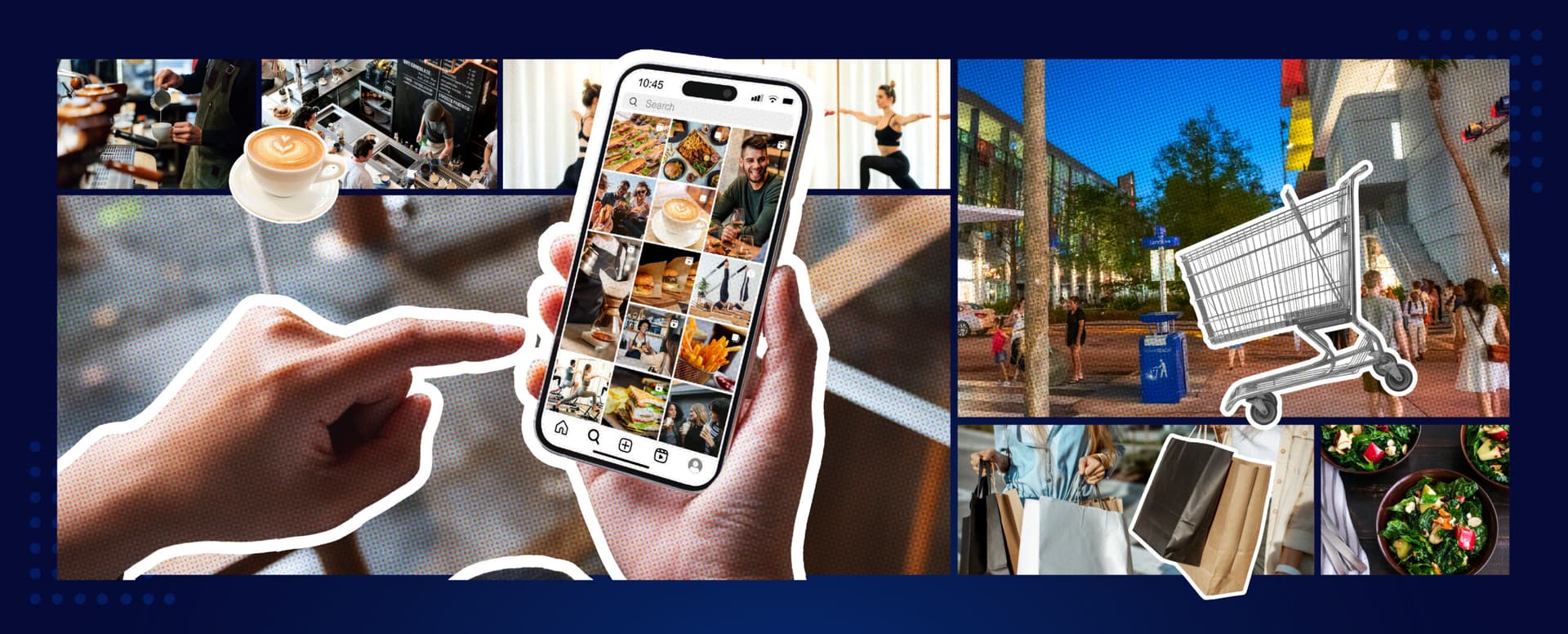
The U.S. retail market is undergoing a major reset. National tenant profit margins have been shrinking, and many large retailers are struggling to remain efficient and profitable. Higher interest rates, tighter capital, and rising operating costs have forced legacy chains to consolidate, with as many as 80,000 retail stores projected to close by 2026, according to the global finance and research firm, UBS.
The contraction of corporate retail has dismantled decades of monotony, opening the door to a more modern and dynamic retail scene. As consumer behavior evolves and demand is shaped by technology and global influence, the line between commerce and culture continues to blur, creating space for a new generation of agile, experiential tenants.
For much of the 20th century and into the early 2010s, American consumer culture was fairly uniform. Your standard shopping experience was filled with the same chains and tenants that ultimately created a homogenized experience. The digitalization of consumerism has become a fundamental anchor in reprogramming the way people engage with brands and what they expect when they enter a space.
The pandemic accelerated that reset. It systemically changed what people value, how they spend their time, and what they expect from retail. The rise of e-commerce instilled a sense of instant gratification in consumers. That convenience didn’t go away, but it did change how people think about physical space. Now, when someone decides to leave home, it has to be for something that feels purposeful.
You can see it in the data. E-commerce sales have skyrocketed from $571 billion in 2019 to about $1.22 trillion in 2024, with projections reaching $1.45 trillion by 2026, growing at an annual rate of nearly 9%, according to the U.S. Census Bureau. But rather than replacing brick-and-mortar, that growth has forced it to evolve.
On the other side of the board is social media, which has completely democratized discovery. It’s a global gateway with on-demand access, creating a more curious and expressive consumer who expects something different every time. Social platforms are now the mainstream forum intersecting identity, storytelling, and consumer influence in real-time. Over 60% of traditional shoppers now regularly visit brand websites or social channels before purchase, according to Salsify’s 2025 Consumer Research Report.
The result? The market’s now defined by experimentation and immersification of the retail experience. Concepts evolve faster, collaboration is the standard, and physical space has become a laboratory for connection, where brands test, learn, and adapt in response to an audience that craves constant novelty. In this new landscape, authenticity outperforms scale. The retailers gaining momentum are the ones who treat their stores as living, shareable expressions of culture. Social media isn’t just shaping taste anymore; it’s replacing storefronts. As discovery and checkout blur into one seamless moment, social commerce sales in the U.S. are expected to surge from $821 billion in 2025 to nearly $1.7 trillion by 2029.
For decades, large national chains relied on scale—more stores, more exposure, more leverage with landlords and lenders. They gambled on perpetual consumerism demand, relying on debt to fuel growth. Expansion came easy when capital was cheap, so they signed long-term leases and took on substantial occupancy costs under the assumption that demand would remain consistent.
But today? Well, that predictability is gone.
The problem is structural. Most legacy retailers are burdened with outdated infrastructures, supply chains, store operations, and IT systems that weren’t built for the pace of change. The default risk for U.S. firms rose to 9.2% at the end of 2024, the highest level since the 2008 financial crisis, according to Moody’s 2025 Asset Management Research report. Those credit pressures have hit retail especially hard, echoing the strain of a broader economic recalibration.
We’ve already seen 59 large retail bankruptcy filings in the first half of 2025, nearly 50% higher than the long-term semiannual average, according to Coresight Research. Major operators like Joann, Macy’s, Rite Aid, Walgreens, and Foot Locker are consolidating, restructuring, or closing altogether. S&P Global reports that companies this year are facing a 64-basis-point contraction in profit margins, despite rising revenue expectations, largely due to higher costs across labor, materials, and logistics. It’s the perfect storm for insolvency.
But even outside of bankruptcy, contraction is visible across nearly every corner of the sector. These macroeconomic headwinds all stem from the same narrative: digital engagement, real-time feedback, and omnichannel expectations that require operational agility—and most legacy platforms weren’t designed for that. Even high-performing brands are being forced to adapt. Look at Starbucks, the company has closed hundreds of stores and restructured its model as regional coffee brands and boutique operators gain traction with consumers seeking authenticity and experience and something decent to eat. People are willing to drive past convenience if it means connection, culture, or quality. Consumers are also driven by making health-conscious decisions, whether it be avoiding seed oil or seeking organic and natural products. Regional tenants tend to be more agile and better attuned to customer trends than corporate chains.
These changing market forces have also raised Chapter 11 filings to their highest level in eight years. Yet, this reset is clearing inefficiencies and making way for leaner, data-driven operators who focus on speed, cultural connection, and financial sustainability. The result is a retail landscape that is more dynamic and agile than ever before.
The tenants backfilling these spaces aren’t placeholders; they’re operators who understand their communities and build brands around the nuances of their market. They move fast, experiment, and don’t wait for corporate approval to try something new. That agility is their advantage.
The regional operators leading this wave understand marketing in a way legacy brands never had to. They didn’t have to adapt to the digital era—they’re integrated by proxy. These are founders who grew up on social media, who treat every location as both a business and a content engine. They’re utilizing storytelling, local influencers, and community engagement to transform what was once traditional retail into cultural real estate. Their customers aren’t just shopping, they’re participating in the brand.
This new generation of tenants moves fast and connects deep. They know how to create spaces that resonate, coffee shops that double as creative hubs, fitness studios that feel like social clubs, and restaurants that build identity as much as they sell food. That connection is what corporate expansion models can’t replicate.
A regional concept that drives consistent foot traffic and community engagement can outperform a national nameplate that’s lost cultural traction. The real question landlords are asking now isn’t “Who can pay the most rent?” It’s “Who can keep this center relevant, busy and sexy?”
StormBurger, a regional restaurant that repurposed a former Church’s Chicken, increased sales fivefold, not because the menu was revolutionary, but because the brand felt alive. They utilized social media, local partnerships, and genuine storytelling to create something people wanted to rally behind. Two of the hottest tenant segments are pilates and coffee, both of which address the post-COVID need for connection and consistency. Pilates is about self-investment and belonging; coffee is about ritual and community. They’re everyday anchors that bring people in and keep them coming back.
You’re seeing experiential tenants, boutique entertainment, and family concepts transform former anchor spaces into vibrant areas of activity. They fragment the big boxes, diversify risk, and extend dwell time. They make centers feel dynamic again. What’s happening now is that landlords are rethinking the definition of “value.” The strongest centers today aren’t just collections of leases; they’re curated ecosystems. The focus is on energy, synergy, and demographic diversity.