
The Rise of Small-Bay Industrial
The industrial sector has seen a significant change following the post-pandemic surge, which resulted in an oversupply of large-scale distribution centers that are 200,000 square feet or greater. Developers responded to the e-commerce boom and low interest rates, and added a record-breaking 1.8 billion square feet of industrial supply across the U.S. since 2020. The new additions outpaced demand as the pandemic slowed down, which led to climbing vacancy rates in the big-box segment.
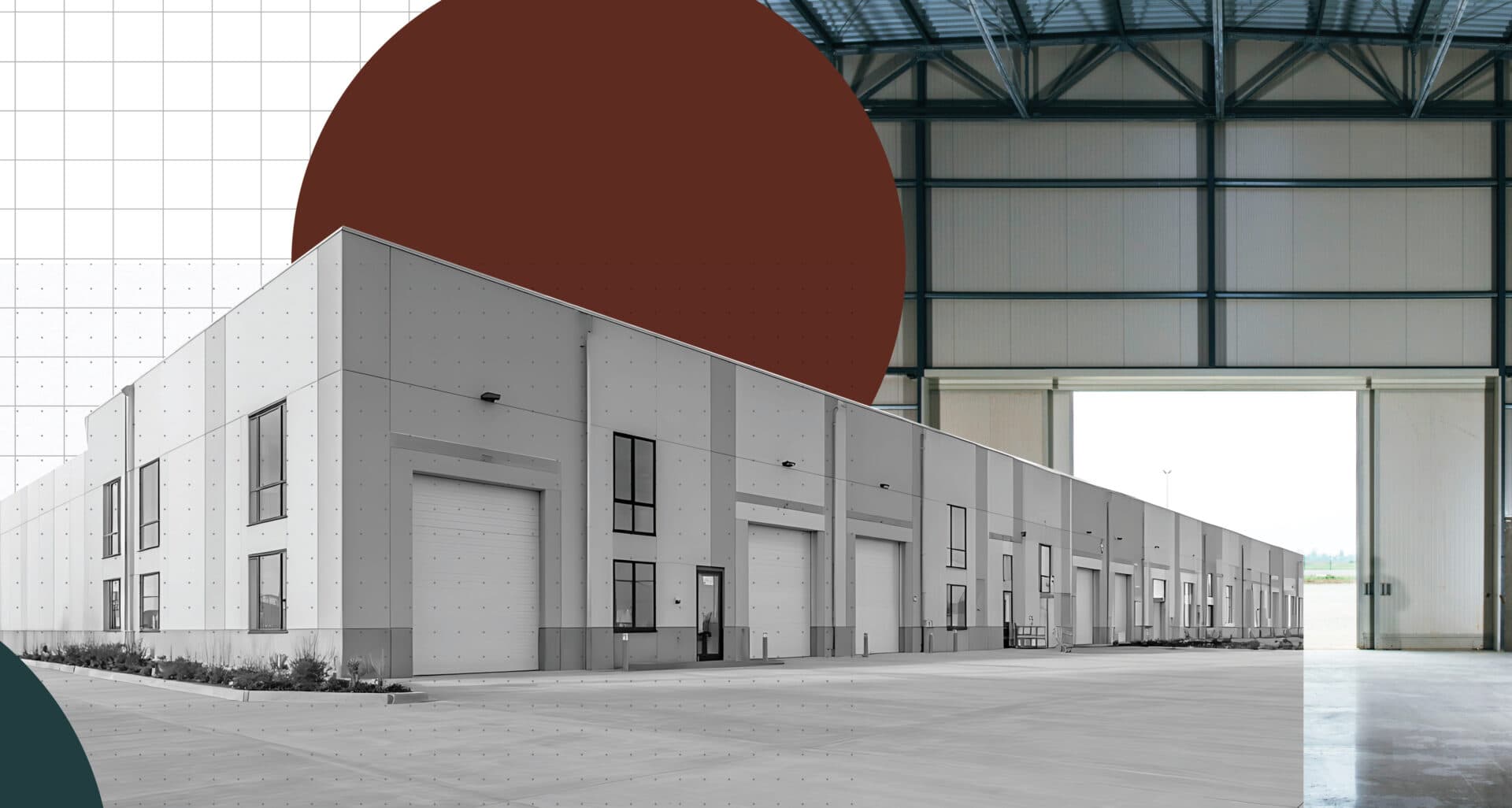
As the market struggled to absorb this massive influx of large product, developers and investors shifted their focus on small- to mid-sized industrial properties, specifically those ranging from 5,000 to 50,000 square feet. This smaller-scale, or “small-bay,” product remains incredibly tight, with a national vacancy rate near historical lows around 3% to 4%, demonstrating
its resilience and importance to last-mile logistics, small businesses, and trade-focused users. The shift highlights a key trend in the evolving industrial sector. While large warehouse development slows, with a vacancy rate around 6%, the demand for smaller, flexible facilities is driving a building boom that reflects the diversity of activity across industrial.
National Small-Bay Trends
A variety of tenants are seeking properties between 5,000 to 50,000 square feet. The demand represents a move away from traditional heavy manufacturing toward specialized, knowledge-based services and high-tech operators. This user base includes local trade businesses—such as plumbers, electricians, and HVAC contractors—and small distributors focused on last-mile logistics who seek infill locations closer to their residential customer base.
Additionally, these small- to mid-sized spaces are essential for the growth of modern tech firms. Startups in robotics, drone technology, and specialized R&D require flexible, functional space for prototyping, light assembly, and system testing without the massive footprint of a traditional factory. This newer user base often prefers shorter lease terms than the 10- to 15-year commitments of large distribution centers, allowing for the agility to scale operations quickly with buildouts as their technology matures.
Across the country, the Sunbelt states, as well as markets with high population growth and limited supply, are experiencing the most acute demand and lowest availability. While urban centers like Los Angeles and New York’s outer boroughs remain tight, high-growth metros across the country, including Phoenix’s East Valley, Houston, Atlanta, and Central Florida, are seeing particularly low vacancy rates for this product type. The national availability for industrial spaces under 50,000 square feet is very tight at roughly 3.4%, which is well below big-box levels.
Competition and Constrained Supply
The structural scarcity and increased demand for industrial spaces under 50,000 square feet are hindered by construction costs. While overall industrial construction prices have stabilized from their pandemic peaks, the cost per square foot for smaller, multi-tenant industrial projects is higher than for large big-box distribution centers. Small industrial properties recorded an average sales price of $142 per square foot, increasing by 17% over the previous year. In contrast, large industrial projects averaged around $75 per square foot, a lower level that dropped by 4.2% in one year.
This disparity is driven by factors like more extensive site work, complex utility infrastructure, a greater number of individual tenant build-outs, and increased costs for specialized labor. The expense of small-bay construction, coupled with high land costs in infill locations, creates significant barriers to entry for developers, limiting new supply and pushing a variety of highly-qualified tenants into further competition for the existing, limited inventory.
San Francisco: Top Metro for Smaller Footprints
The San Francisco Bay Area is a prime example of the high demand and scarcity driving the small-bay industrial market’s outperformance. The Bay Area is a prominent metro for its land limitations and consistent demand from high-value, specialized companies. These factors create an environment where the price per square foot and rental rates for the sub-50,000-square-foot segment have demonstrated greater stability and often faster growth than large-scale facilities, which have seen more volatility due to oversupply in other national markets. The essential need for local logistics, high-tech R&D support, and vital trade services means tenants are willing to pay a premium to secure space close to the metro’s talent and consumer base.
Next-generation tenants are increasingly fueling this demand. While traditional logistics remain active, the region has seen an influx of AI and robotics firms securing smaller footprints for computer power and flex lab setups, often displacing traditional tenants. One example is the metro’s Peninsula submarket. Here, land is the most limited because it is home to several R&D, life sciences, and specialized tech operators, and the area often outpaces Silicon Valley in conversion activity. These users require older industrial stock that can be repurposed to meet high electrical power and specialized utility needs.
Meanwhile, the Oakland/East Bay submarket provides a lower-cost option. Fueled by activity at the Port of Oakland and last-mile distribution requirements, small-bay facilities here are essential for fabrication, local logistics, and distribution that serve other locations across the metro. Further south, San Jose/Silicon Valley is seeing increased demand driven by advanced R&D and manufacturing support services, with data center growth also adding to these expansions. While new additions here are consuming significant industrial land for large, power-intensive facilities, the demand also creates a large domain of support and technical services that rely on flexible, smaller industrial spaces.
Price per SF Rises Since Pandemic Metrowide, But Has Since Stabilized
*up to 50,000 SF | Source: CoStar Group, Inc.
A Foundation for the Future Economy
The small-bay segment demonstrates the essential, high demand backbone of modern industrial. Unlike the large-format sector, which grappled with post-pandemic oversupply, the small-bay market is characterized by essential demand outpacing scarce supply. With a variety of tenants, from specialized R&D firms and high-tech startups to local contractors and last-mile logistics providers, their operations require proximity to urban centers.
While new, Class A small-bay facilities command premium rents, the competition is increasingly driving smaller businesses to seek more affordable Class B and C industrial properties. This flight to quality underscores a core structural issue—the limited supply of small-bay facilities.
Developers are beginning to explore solutions, like multi-story industrial construction in land-constrained urban markets. While this model is effective for maximizing floor space on a small footprint, its high construction cost means it can only deliver high-end, Class A product, which does not meet demand. The gap between this new, high-cost supply and the consistent need for affordable flex and Class B/C space suggests that the small-bay segment will remain the most increasingly sought-after industrial asset for the foreseeable future.